

Reef Recycling case study · B2B brand and website project
Reef Recycling: making an international plastics trader look like one
Reef came to Claywheel for a new website. The bigger opportunity was making sure that website represented the business accurately.
Reef is an international plastics trader, supplying customers across Europe. Its brand and website told a different story, speaking more to a UK audience than to the European customers it serves. The project brought Reef’s positioning, messaging, identity and website together around what the company does.
A bigger business than its website showed
Based in Tadcaster and trading since 2014, Reef has built an international business. It checks the quality of the material it buys and handles the transport and paperwork needed to get it across borders.
Very little of that came across online. The old brand and website leaned on recycling and environmental messages, and said little about Reef’s trading experience or what it takes to get material to customers across Europe.
The website wasn’t bringing in many of the enquiries Reef wanted either. Plastics information was shown as images rather than searchable text, and most of what arrived wasn’t relevant to the business.
Reef’s leadership team was clear about what it wanted: to be found by the right buyers and suppliers, and to start conversations that could grow into long-term accounts and lasting relationships.
Trader, not recycler
The decision was to position Reef clearly as an international plastics trading partner, with European processors as the main audience and UK suppliers an integral part of the business.
Reef buys and sells plastic, taking ownership of the material it trades. That’s an important distinction in its industry, and the old website wasn’t making it clear. Getting it right became the foundation of the whole project.
Claywheel worked with Reef’s team to understand how it sells and what it needed to achieve. The research covered the existing website and its analytics, how other plastics traders present themselves, and the size and location of the customers Reef wanted to reach. Each finding was checked back with Reef before anything was decided.
The decision was to position Reef clearly as an international plastics trading partner, with European processors as the main audience and UK suppliers an integral part of the business.
Potential customers needed to see what Reef supplies and how it handles logistics and compliance. Above all, they needed to see how easy Reef would be to buy from.
UK suppliers needed to see what Reef’s existing suppliers already know: Reef collects when it says it will and does what it promises.
These were already strengths of the business. The job was to make them visible, so Reef could attract more of the buyers and suppliers it wanted to work with.
An identity with more character
One important decision was what to put on the logo. Keeping “Recycling” in the wordmark would have reinforced the very misunderstanding the project was trying to correct. So the new identity leads with just REEF, while the company’s registered name stays the same.
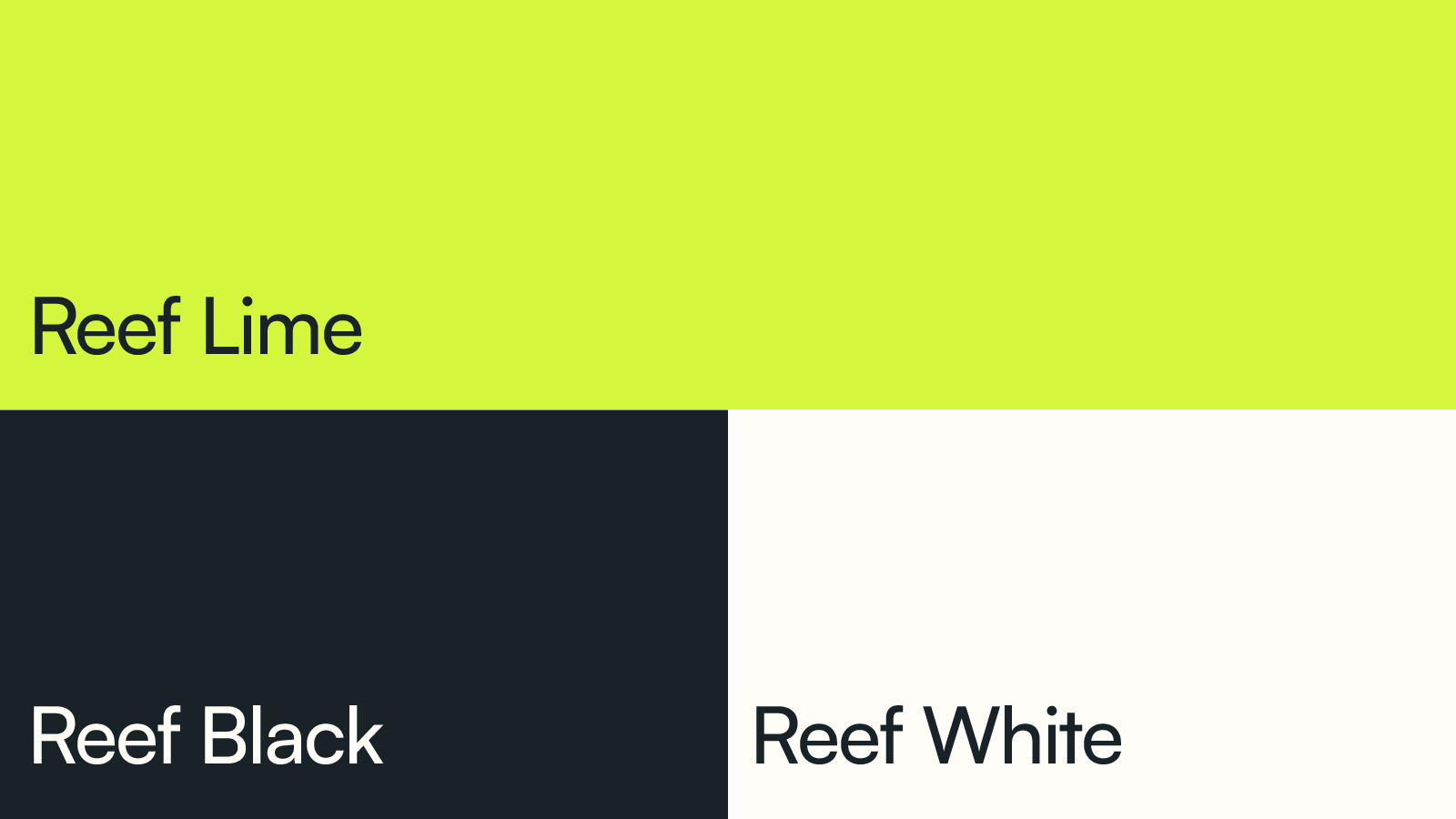
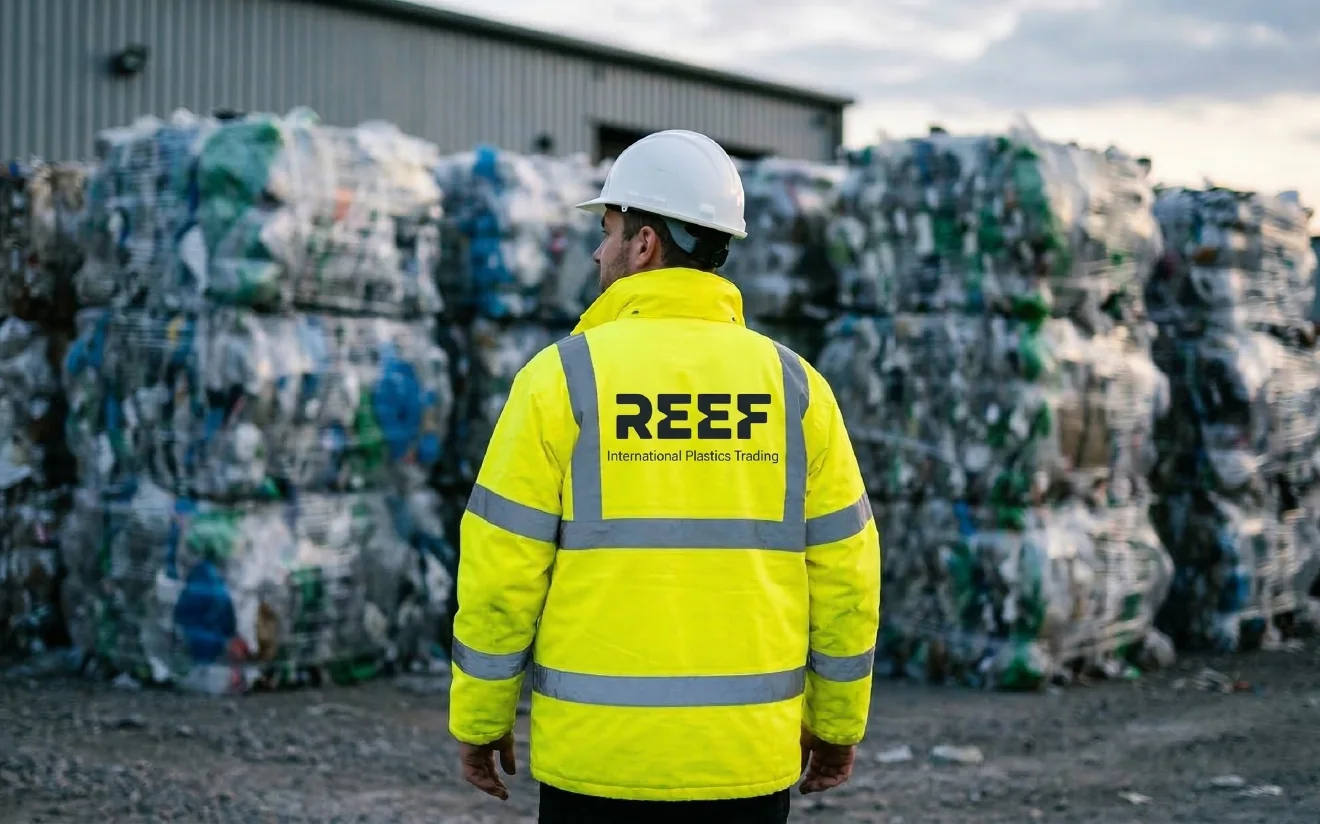

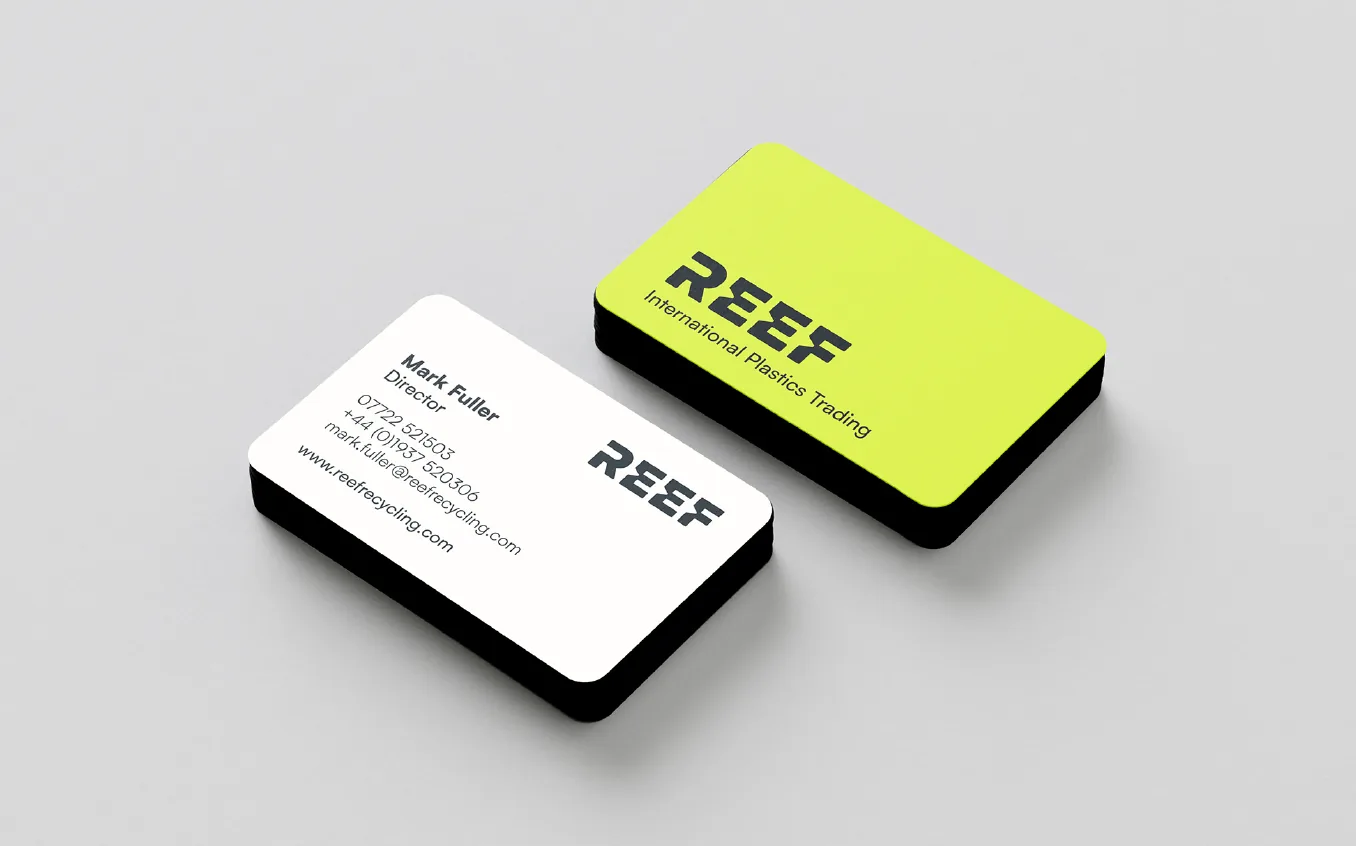
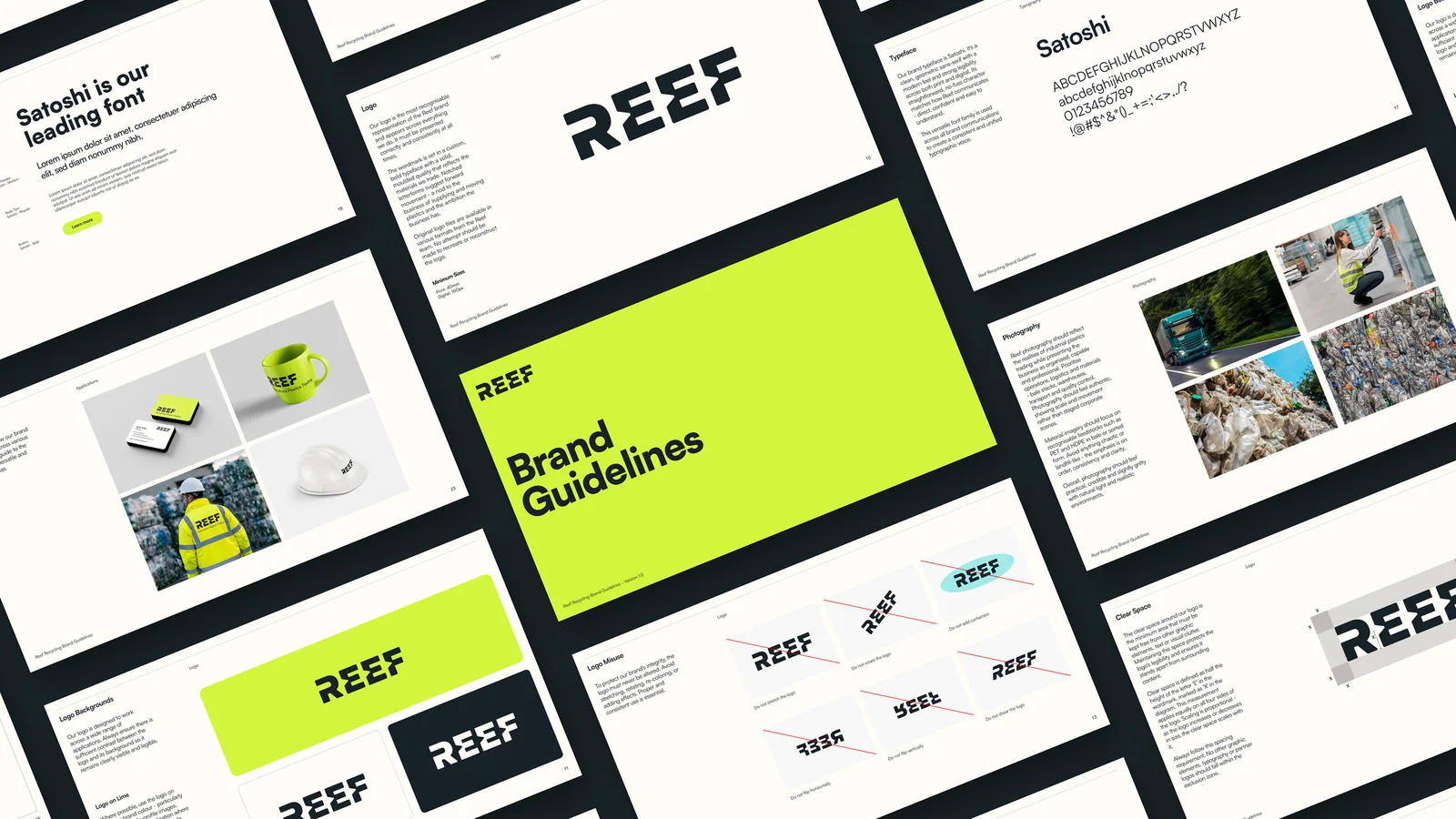
Claywheel designed a bold wordmark with solid letterforms that reflect the materials Reef trades, and small notches that suggest movement and transport. Lime green, paired with near-black and soft white, stands out clearly against the rest of the market. So does Reef.
Typography is straightforward, and the photography sticks to materials and transport. Brand guidelines pull it all together, so Reef can use the identity consistently across its marketing and sales materials as well as the website.
A website built around how Reef trades
With the positioning and identity agreed, the website was organised around the people Reef wanted to reach.
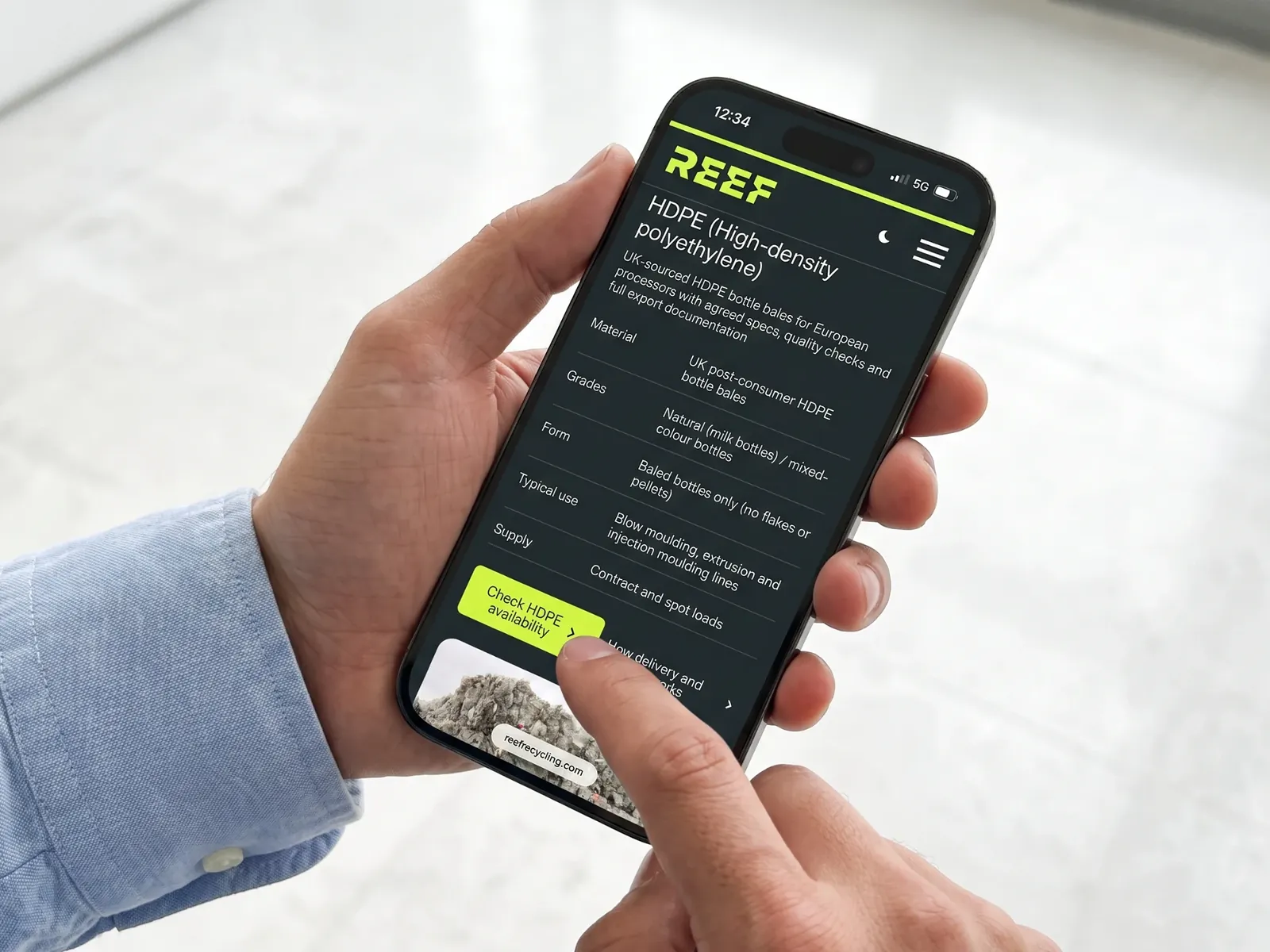
European processors became the main audience. Dedicated plastics pages explain the materials Reef supplies, and supporting pages cover logistics and compliance. UK suppliers have their own route, with a separate way to offer material.
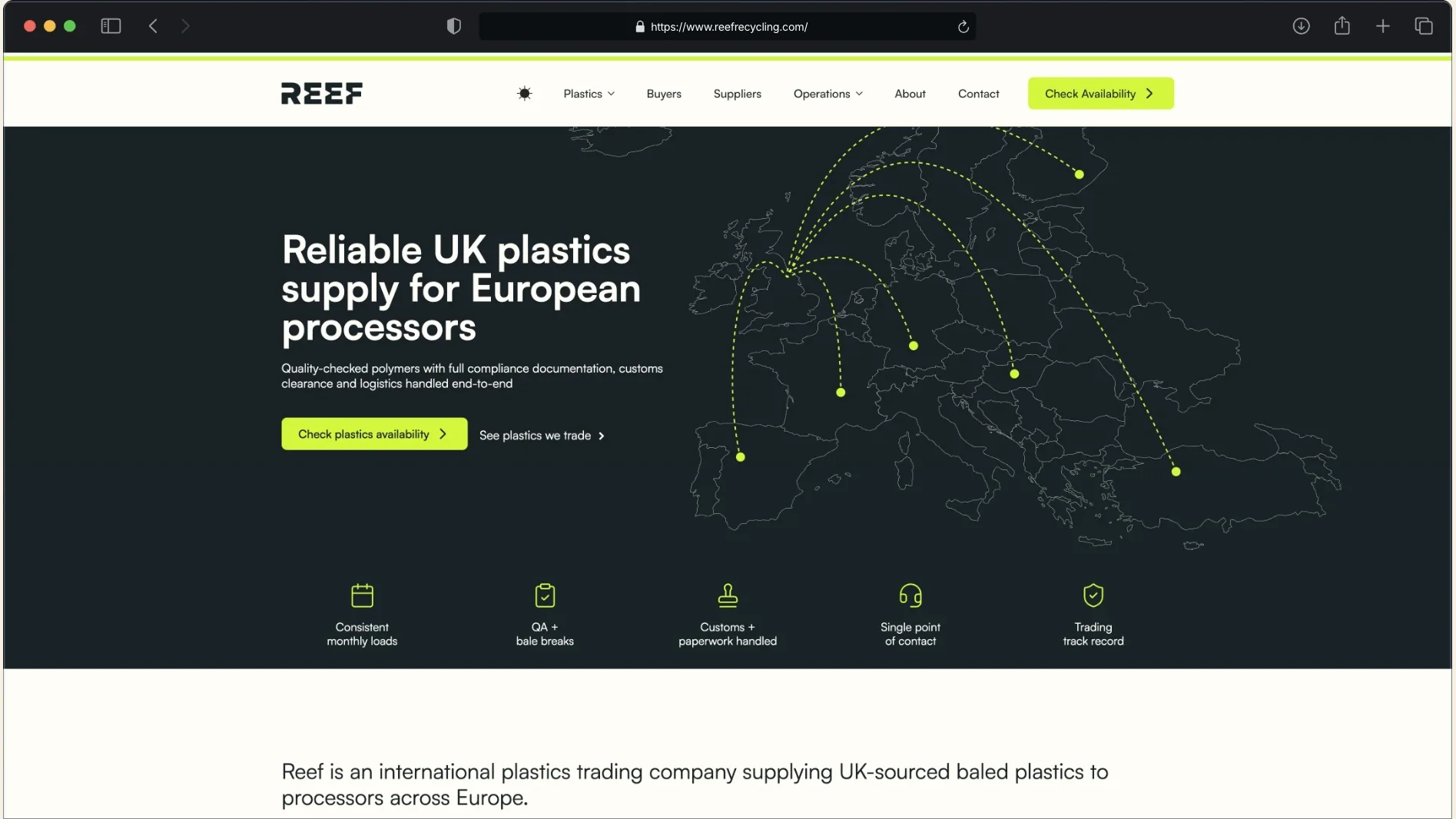
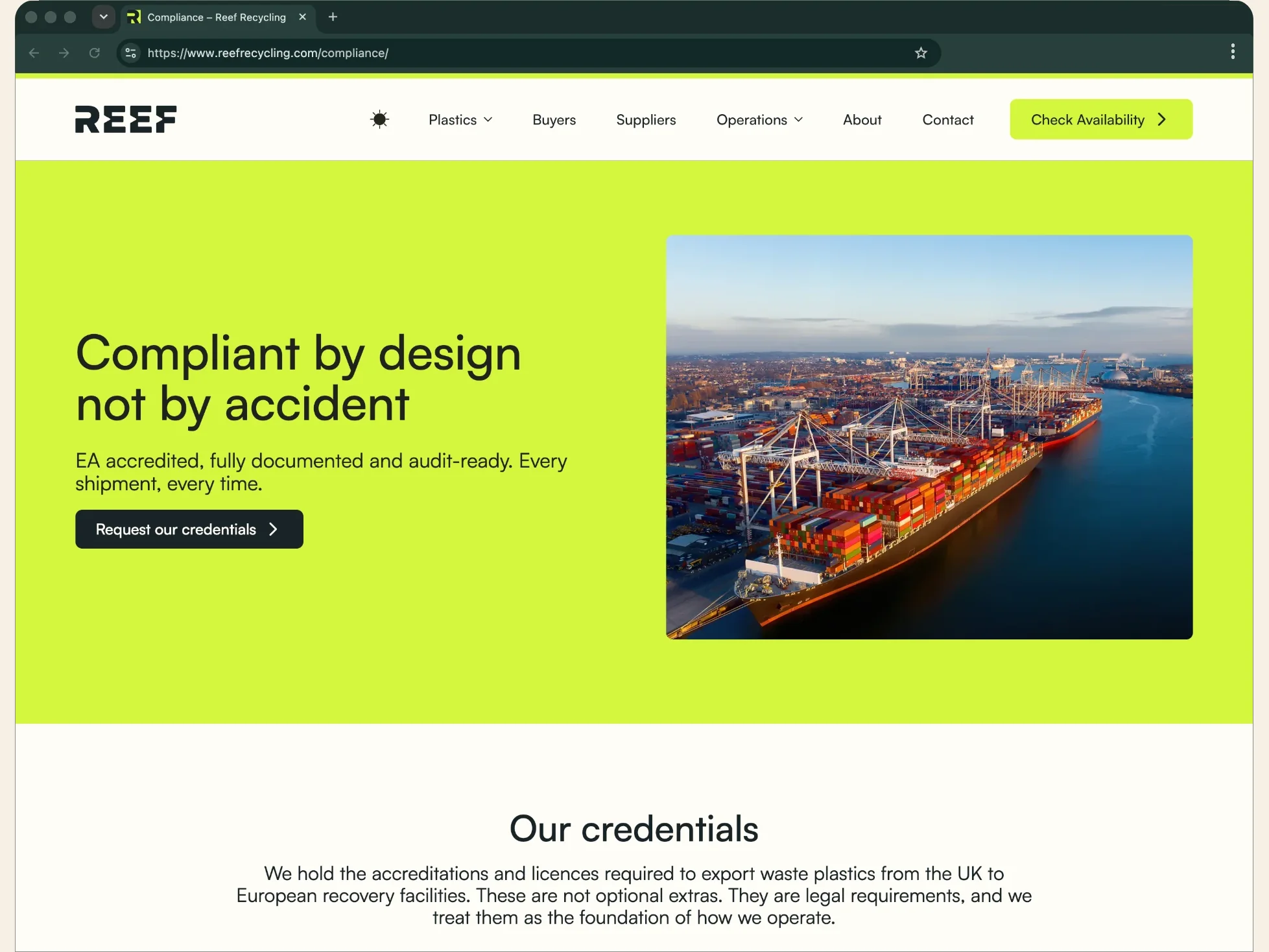
One of the most important findings came from a meeting about the operational side of the business. Reef can arrange transport and customs clearance within an agreed delivered price, taking care of the associated paperwork too. To the team, that was simply part of doing the job. But for a European buyer who wants those arrangements handled, it makes Reef easier to trade with.
It was a valuable part of Reef’s service that deserved more attention. So logistics and compliance became central parts of the website, helping potential customers understand how Reef works and what they can expect from working with the business.
Many of Reef’s European customers read English as a second language, so the copy uses straightforward wording and familiar industry terms, without unnecessary jargon. An Impressum page gives company details in the format German-speaking buyers expect.
The site was built in WordPress, with the new identity carried through every page, and set up so Reef can manage and update its own content.
A much better problem to have
Significant increase in meaningful enquiries
From businesses Reef hadn’t spoken to before
Still coming in since launch
Improving it after launch
The project included a post-launch review to see what was working and what could be improved. Not every enquiry was a fit: some came from outside Reef’s target markets, and others didn’t include enough detail to judge the opportunity.
The review meant going through the actual enquiries with the team, including how each one was followed up and what the team made of it.
The general contact form was attracting a mix of requests, while the dedicated plastics forms were collecting the details Reef needed. So the contact page now gives visitors clear choices: buying plastics, supplying plastics, or a general enquiry by email. The forms were also tightened to ask more about materials and volumes.

“What stood out was how much time Jonny invested in understanding our sector and what we’re trying to achieve as a business.”
Mark Fuller
Director and Commercial Lead, Reef Recycling
Two things you can take from this project
Pay attention to what feels ordinary to you
Some of the most valuable things a business does are the things its own people barely think about. At Reef, arranging transport and customs requirements was simply part of the job. For a potential buyer, knowing those arrangements could be taken care of made Reef easier to buy from.
Start with the people doing the work, not only the people selling it.
The sales team only sees part of the picture, so talk to operations, customer service, delivery and anyone else involved in looking after customers. They often know things nobody else does.
Ask what regularly causes problems, what they do to prevent them and what customers would have to deal with if they didn’t. It’s worth making this a regular conversation, perhaps once a quarter, rather than a one-off.
Then speak to your sales team. Which of those things do prospects ask about, and what do customers particularly appreciate? Look for the things your business does well that customers also value.
Before turning anything into a selling point, check that it genuinely matters to the people buying from you. Something that impresses your team might be routine across your industry, or simply not important to customers.
Once you’ve found something worthwhile, make more of it. Show customers what you actually do. A specific example or photograph will tell them more than another claim about excellent service.
Find out why enquiries go nowhere before changing anything
When a website brings in enquiries that don’t turn into business, it’s tempting to blame the traffic or the website itself. Either could be working fine while something else is going wrong.
Try reviewing your last 20 website enquiries.
Include the ones your team dismissed, not just the promising ones. For each, note where it came from, what the person wanted and what happened next. Ask whoever dealt with it what they made of the opportunity.
Match the fix to the problem. More form fields won’t fix misleading messaging, and a new website won’t fix follow-up that isn’t happening.
Make the smallest sensible changes first, then review the next batch of enquiries in the same way.
Sort what you find into three kinds of problem, because each needs a different answer.
Wrong customer or requirement? Look at the page they visited. Is something attracting people you can’t help, or giving them the wrong impression?
Potentially suitable, but missing essential details? Check what your team repeatedly has to ask. Would a clearer explanation or one more form question help?
A worthwhile enquiry that went nowhere? Look at how quickly it was answered, who followed it up and what stopped the conversation moving forward.
Enough about Reef. What about you?
If there’s something about your business that your marketing isn’t getting across, I’d love to hear about it.